


“如果我們不在了,誰會想念我們?”反思給這家銀行帶來了新使命
Matthew Heimer
2018-08-26
清潔能源項目曾經面臨融資難的問題,但這家銀行找到了吸引投資的辦法。
 文本設置
文本設置
 Plus(0條)

|
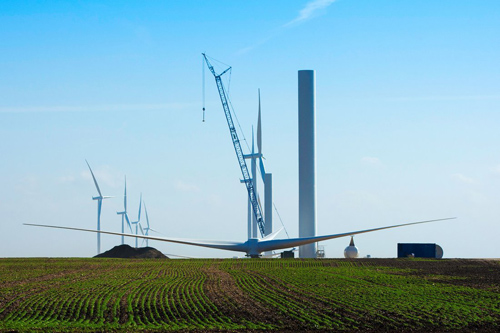
俄克拉荷馬州是化石燃料生產中心,在這里,牧場上散落著的是抽油機。但如果驅車一小時,前往俄克拉荷馬城以西的格雷迪縣,就會看到另一番景象。在明科市外圍的小山頂上矗立著幾十座80英尺(約24.4米)高的風力發電機,它們的扇葉不停地嗡嗡作響,時而還能聽到奶牛的叫聲和遠處汽車駛過的聲音。 這片金屬“森林”是先驅者平原(Pioneer Plains)項目的一部分,為大約4.2萬戶家庭提供電力。這些風力發電機屬于能源經濟的高風險轉型,賭的是可再生能源可以規模化,進而更為經濟地代替那些引發氣候變化的化石燃料。同時,風電場也是金融轉型的象征——如果沒有“綠色債券”這種10年前還不存在的投資工具,風電場也許根本就不會出現。 這種債券是美國銀行發債部門的創意。在《財富》雜志今年的“改變世界”公司榜單上,這家資產規模870億美元、員工20.9萬人的巨無霸位居第三。這項工作是美銀“環境業務倡議”的一部分,該倡議的規模為1250億美元,它讓總部設在夏洛特的美銀成了“氣候金融”大戶。這項業務平淡無奇,但卻很關鍵,它引導著投資者把資金投入低碳經濟。2013年至今,由美銀一手發明的綠色債券已在全球范圍內融資4420億美元,為借款人提供可再生能源創新費用。這些借款人中,有如加州Antioch市聯合學區一樣極小的借款人,也有像蘋果公司一樣龐大的借款人。 |
OKLAHOMA IS AN EPICENTER of fossil-fuel production, a state where oil-well pump jacks punctuate the pastures. But if you drive out to Grady County, an hour west of Oklahoma City, you’ll encounter a different mechanical landscape. There, atop the hills outside Minco, dozens of 80-foot-tall turbines churn, their blades generating a steady drone to accompany the occasional dairy-cow bleat and the buzz of distant cars. This metallic display is part of Pioneer Plains, a sprawling wind-power project that generates electricity for some 42,000 homes. The turbines are part of a highstakes transformation in the energy economy—a bet that renewable power can scale up as a cost-effective replacement for fuels that contribute to climate change. But the wind farm is also a symbol of financial transformation: It might never have sprouted if it weren’t for “green bonds”—an investment vehicle that didn’t exist a decade ago. Those bonds were the brainchild of dealmakers at Bank of America—the $87 billion, 209,000-employee giant that occupies the No. 3 spot on Fortune’s Change the World list this year. Their work is part of BofA’s $125 billion Environmental Business Initiative, a campaign that has established the Charlotte based bank as a powerhouse in “climate finance”—the unglamorous but essential business of steering investor capital into the low-carbon economy. Green bonds, which the bank all but invented, have raised $442 billion worldwide since 2013, helping borrowers both tiny (the Antioch, Calif., Unified School District) and enormous (trillion-dollar Apple) pay for renewable-energy innovations. |
|
大多數環保倡導者都認為沒有私營行業的大力推動,就無法進行可再生能源革命。美銀這樣的大企業及其關系網和厚實的專業積累可以發揮決定性作用,把投資者和渴求資金的綠色項目聯系在一起。追蹤綠色能源投資的倫敦非營利組織Climate Bonds Initiative聯合創始人兼首席執行官西恩·基德尼說:“打造歷史上第一只商業綠色債券,向機構投資者推銷——美銀給這個市場帶來了可信度。它給這個市場所帶來的一切都非常寶貴。” 在這個時代,美國人可以通過當地電力公司購買太陽能電力,可以開著特斯拉轎車去辦事,所以很難想象風電場或者太陽能發電項目還曾四處謀求資金。但在10年前,在橫掃一切的金融危機中,情況正是如此。美銀美林ESG債務資本市場董事總經理蘇珊妮·布克塔解釋說:“對風險的喜好真的不復存在了。人們認為大多數環境投資都有風險。” 當時,美銀為錯判風險付出了慘重代價。次貸壞賬讓它的資產負債狀況陷入崩潰。投資者棄它而去,這使美銀的市值蒸發了八成以上。該行最終接受了450億美元的聯邦援助資金。2009年12月上任的CEO布萊恩·莫伊尼罕跟高管團隊進行了多次深刻反省。當時美銀已償還了援助資金,但就像莫伊尼罕回憶的那樣,“我們為什么在這兒?如果我們不在了,誰會想念我們?”成了新的主題。 美銀高管們重新思考了自己的使命,并且圍繞著較保守的投資、美銀的基本業務以及消費貸款壓縮開支。在那個關鍵階段,時任全球首席策略兼營銷官的安妮·菲紐肯逐漸相信綠色投資可能是一項適合美銀的業務。2007年,美銀打算為此投入200億美元,節能建筑等項目不大不小的成功讓她和她的團隊備受鼓舞。菲紐肯回憶道:“當時我們開展的這項業務讓我們相信我們可以擴大規模,但我們必須證明這一點。” 2013年,菲紐肯得到了機會——在她敦促下,美銀承諾為“低碳和可持續業務”再劃撥1250億美元,從而動員了一大批員工來謀劃和推介新項目。承銷商可以把點子賣給投資者;能源市場交易商知道哪里需要清潔電力;工程師了解風力發電機和太陽能面板的方方面面——美銀在這三個專業領域都聘請了幾十人。現已成為美銀副董事長的菲紐肯成了聯絡人和倡導者,她把不同團隊中的人召集在一起,并且幫他們獲得高層投資。她說:“如果能讓別人在他們的舒適區以外思考、工作并進行橫向思維,就可以做成很多事。” 美銀環境業務部門負責人婭歷克斯·麗芙特曼對此表示同意:“我們把別人從他們知道怎么做的事務中拉出來,再把他們不知道怎么做的任務派給他們。然后他們想出主意的速度是我們預期的兩倍。” |
Most environmental advocates agree that a renewable revolution can’t happen without a big private-sector push. And a behemoth like Bank of America—with its web of relationships and deep pool of expertise—can make a decisive impact in connecting investors with cash-hungry green projects. “Doing the first-ever commercial green bonds, appealing to institutional investors—BofA gave this market credibility,” says Sean Kidney, cofounder and CEO of the Climate Bonds Initiative (CBI), a London nonprofit that tracks green-energy investing. “They’ve been invaluable.” IN AN ERA WHEN AMERICANS can buy solar power through their local utilities and run errands in Teslas, it’s hard to imagine that wind farms or solar-panel arrays ever went begging for funds. But a decade ago, during the financial-crisis catastrophe, that’s exactly what was happening. “Risk appetite was really diminished,” explains Suzanne Buchta, managing director of ESG debt-capital markets at BofA Merrill Lynch. “And most environmental investing was seen as risky.” At the time, Bank of America was paying a heavy price for misjudging risk. Bad bets on subprime mortgages had demolished its balance sheet. Fleeing investors wiped out more than 80% of its market value, and the bank wound up taking $45 billion in federal bailout money. Brian Moynihan, who was tapped as CEO in December 2009, found himself holding multiple rounds of soul-searching with his C-suite team. The bailout had been repaid by then, but the new theme, as Moynihan recalls it, was “Why are we here? Who would miss us if we were gone?” Bank of America’s leaders rethought their mission, retrenching around more conservative investing and basic business and consumer lending. During that pivot, Anne Finucane, then the bank’s global chief strategy and marketing officer, became convinced that green investing could fit under that umbrella. The bank had made a $20 billion commitment to such projects in 2007, and modest successes with projects like energy-efficient buildings had encouraged her and her team. “We were convinced by the business that we were doing that this could work on a larger scale,” Finucane recalls, “but we had to prove it.” In 2013 she got her chance: At her urging, Bank of America committed to deploying another $125 billion for “low-carbon and sustainable business.” That mobilized an army of employees to dream up and pitch new projects. Underwriters who could sell ideas to investors; energy-market traders who knew where clean power was in demand; engineers who knew the ins and outs of turbines and solar panels—BofA employed dozens in each category. Finucane, who’s now the bank’s vice chairwoman, acted as connector and advocate, bringing people from disparate teams together and helping them get buy-in from the top. “If you ask people to think outside their comfort zone, to work and think horizontally, a lot can happen,” she says. “We were taking people off the things that they knew how to do, and putting them on things they didn’t know how to do,” agrees Alex Liftman, Bank of America’s environmental operations executive. “And they came up with ideas twice as fast as we expected. |

|
這些“異想天開”的人中就有債務專家布克塔。她是遠足愛好者,熱愛大自然。布克塔一直在思索怎樣把投資者拉到綠色項目中。另外,她還知道債券相對股票有一些優勢。一是穩定性——債券利息可以預期,而且只有在市場大崩潰時大多數債券才會像股票那樣劇烈波動。這讓債券非常吸引厭惡風險的養老基金經理、保險公司以及管理著全球多數資本的其他機構投資者。另一項優勢是“有保護手段”——和股票不同,可以通過設計要求債券發行人只能將所得資金用于特定目的。 布克塔從2013年開始和另外幾家大銀行的同行合作,討論出了一些“綠色債券整體原則”。他們一致認為,只有將所得資金投入顯然有利于環境的項目,一只債券才稱得上“綠色”。發行人必須明確告知投資人資金用途和項目進展,最好能由獨立機構為債券的綠色程度頒發證書。布克塔說,“這個概念的精彩之處在于它是如此的簡單而且如此的易于接觸”,綠色債券可以在投資者的資金貢獻和有助于氣候的項目之間建立起清晰而且可以驗證的聯系。 為驗證這個概念,美銀當了一次“小白鼠”。2013年該行發行了歷史上首只“基準規模”(或者說規模很大)的公司綠色債券。美銀從投資者那里籌集到了5億美元,然后將這筆錢投入了十幾個項目。除了為先驅者平原項目購買風力發電機,這些資金還幫洛杉磯和奧克蘭將大約17萬盞路燈升級為LED節能燈,并讓Antioch市在24所學校建立了太陽能發電站。 |
ONE SUCH BRAINSTORMER was Buchta, the debt specialist. An avid hiker and nature lover, she had been mulling how to draw investors into green projects, and she knew bonds had advantages over stocks. One was stability: Bond interest is predictable, and only during major meltdowns do most bonds become as volatile as stocks. That makes bonds hugely appealing to the risk-averse pension-fund managers, insurers, and other institutional investors that oversee the lion’s share of global capital. Another advantage was “ring fencing”: Unlike stocks, bonds could be structured to require issuers to use the proceeds only for specific purposes. Beginning in 2013, Buchta collaborated with her counterparts at several big banks, hashing out some broad “Green Bond Principles.” A bond, they agreed, could be called “green” only if its proceeds paid for projects with a clearly positive environmental impact. Issuers would have to be transparent with investors about where the money went and how the projects progressed, and, ideally, an independent party would certify the bond’s greenness. “The brilliant thing about the concept is that it’s so simple and so easily accessible,” says Buchta: A green bond would offer investors a clear, verifiable connection between their financial commitment and a project that helps the climate. To test the concept, Bank of America played guinea pig. In 2013 it issued the first-ever “benchmark-size” (that is, big) corporate green bond. BofA borrowed $500 million from investors, deploying the proceeds into a dozen different projects. The funds paid for turbines at Pioneer Plains; they also helped upgrade some 170,000 streetlights in Los Angeles and Oakland with energy-saving LED bulbs, and enabled Antioch to build solar arrays at 24 schools. |
|
如果只憑自己,這些可能有風險的小項目或許很難吸引到出資人,或者有可能使用高息貸款,甚至根本借不到錢。美銀為它們降低了融資成本,將它們打包并用自己的信用評級為之提供支持(上述3年期債券的利率為1.35%,低息環境下這對投資者很有吸引力,和其他借款人相比也更有競爭力)。同時,盡管回報不是很高,這只債券仍獲得了超額申購——在機構投資者尋找“更綠色”機會的情況下,需求超過了債券的發行規模。 市場證明了概念,接著是其他借款人爭相涌入。馬薩諸塞州政府于2013年發行了第一只貼“綠色”標簽的市政債券。大型公用事業企業Southern Co.為太陽能和風能項目籌集了逾10億美元。2016和2017年,蘋果公司發行了25億美元綠色債券,資金用途是為該公司更多的設施提供可再生電力。這些交易都由美銀擔任主承銷商,也就是吸引投資者的撮合者。截至目前,美銀已經承銷了270億美元的綠色債券,超過了其他任何一家美國銀行。同時,一個更大的市場已經成型。Climate Bonds Initiative的數據顯示,2017年1月1日以來綠色債券的發行金額已達2540億美元,超過了此前四年的總和。 以創造性方式為綠色事業謀得資金讓銀行業人士感到驕傲。在先驅者平原(歸NextEra Energy所有,該公司在“改變世界”榜上排名第21位)等二十幾個能源項目中,美銀用發債所得資金進行“稅收公平”投資,也就是向開發商支付預付款,從而換取他們的綠色能源退稅權。這樣做讓開發商獲得了建設和維修資金;美銀則可通過它拿到的退稅權來降低自身稅務開支。美銀的另一個項目Catalytic Finance Initiative專門用于巧妙地解決氣候金融難題。去年,Catalytic Finance Initiative團隊幫Vivint Solar將來自3萬個居民太陽能賬戶的現金流整合為一只規模2.03億美元的債券,然后將它出售給了投資者。 |
On their own, those small, potentially risky projects would have struggled to attract lenders and would have borrowed at high rates if they could borrow at all. By bundling them and backing them with its own credit rating, Bank of America brought the cost down. (The three-year bond paid 1.35%—attractive to investors in a low-rate climate, but a bargain for borrowers.) And although the payout wasn’t huge, the bond issue was oversubscribed: With institutional investors seeking more green opportunities, there was more demand than there were bonds to sell. The market had its proof of concept—and other borrowers rushed in. The Commonwealth of Massachusetts issued the first municipal bond to be labeled “green,” in 2013. The giant utility Southern Co. raised more than $1 billion for solar and wind projects. Apple issued $2.5 billion in green bonds in 2016 and 2017, financing an effort to run more of its facilities on renewable power. BofA was the lead underwriter on each of those deals, playing matchmaker to attract investors. To date, it has underwritten $27 billion worth of green bonds, more than any U.S. bank. At the same time, a broader market has taken off. Since Jan. 1, 2017, there have been $254 billion in green-bond issuances, according to CBI—more than in the previous four years combined. Bank staffers take pride in the creative ways they’ve deployed capital for green causes. At Pioneer Plains (which is owned by NextEra Energy, No. 21 on the Change the World list) and two dozen other energy projects, BofA has used bond proceeds to make “tax equity” investments, paying developers upfront in return for the right to claim their green-energy tax credits. The deals give the developers funding for construction and repairs; the bank uses the credits to cut its own tax bill. Another BofA project, the Catalytic Finance Initiative, specializes in crafty climate-finance puzzle solving. Last year the CFI team helped Vivint Solar package the cash flows from 30,000 of its residential solar accounts into a $203 million bond and sell the debt to investors. |

|
美銀并未具體說明環境業務創造了多少收入,但承銷費、貸款利息和咨詢費已經給它帶來了利潤。2007年以來美銀承諾將為綠色業務投入1450億美元,到目前為止已經劃撥資金逾960億美元。該行自身的情況最近也有好轉。在過去三年中,美銀股價的上漲速度一直是標普500指數的兩倍,該公司利潤也增長了20%。 美銀設計的債券幫Vivint Solar籌集了2億多美元資金。今年4月,四位經濟學家發表的初步論文讓綠色債券粉絲們有理由樂觀起來。這些經濟學家發現,“綠色”市政債券的收益率比非綠色債券低6個基點,而對更進一步、獲得了綠色認證的債券來說,這個差距會增加1-2倍。買家抬高價格時債券收益率就會下降,因此較低的收益率表明對綠色債券的需求超過了普通債券。就典型的市政債券而言,這有可能節省下數百萬美元利息。參與撰寫該論文的紐約大學斯特恩商學院金融學教授杰弗里·沃格勒說,和這些益處相比,“認證一只綠色債券的成本不高”,而且借款方和投資人都會“蒙上一層環保光輝”。 亟待回答的問題是這樣的光輝能變得多大、多亮?而且速度如何?電動汽車生產、能源存儲、“智能電網”建設——這些都是可以取得長足進步的領域,但私營行業必須要動員資金來支持它們,而且是以每年萬億美元的規模,而非數十億美元。美銀CEO莫伊尼罕指出:“公共資金不夠。但必須以私人資金習慣的方式來接觸它。”如果較為穩定和熟悉的綠色債券能把更多大資金吸引入局,美銀將功不可沒。(財富中文網) 原文最初刊登在2018年9月1日出版的《財富》雜志上,題為《吹動綠色能源的風》。 譯者:Charlie 審校:夏林 ? |
BofA doesn’t break out how much revenue its environmental business has generated, but underwriting fees, loan interest, and advisory fees have made the enterprise profitable. To date, the bank has deployed more than $96 billion of the $145 billion it has committed to green business since 2007. Its own fortunes have improved lately too. Over the past three years, its stock has risen twice as fast as the S&P 500, and profits are up 20%. A bond deal structured by Bank of America helped Vivint Solar raise more than $200 million.In April, four economists released a working paper that gave green-bond fans reason for optimism. They found that municipal bonds labeled “green” paid six basis points (0.06%) less in yield than nongreen bonds—and that the effect doubled or tripled for bonds that took the extra step of being certified green. Bond yields fall when buyers drive up prices, so the lower yields suggest that demand for green bonds is stronger than the norm. On a typical muni bond, that could result in millions of dollars in savings on interest. Compared with those benefits, “the cost of certifying a green bond is modest,” says coauthor Jeffrey Wurgler, a professor of finance at the NYU Stern School of Business, while borrower and investor alike “get a green glow.” The urgent question is how much bigger and brighter that glow can get, and how quickly. Electric-vehicle production, energy storage, the building of “smart grids”—all are areas where great strides could be made, but only if the private sector can mobilize the money to fund them, at the rate of trillions per year rather than billions. “Public capital is not enough,” notes BofA’s Moynihan. “But private capital has to be accessed in a way that it’s used to being accessed.” If green bonds, with their relative stability and familiarity, lure more big money into the game, Bank of America will have done a lot to pave the way for it. A version of this article appears in the September 1, 2018 issue of Fortune with the headline “The Wind At Green Energy’s Back.” |

請打開財富Plus APP